


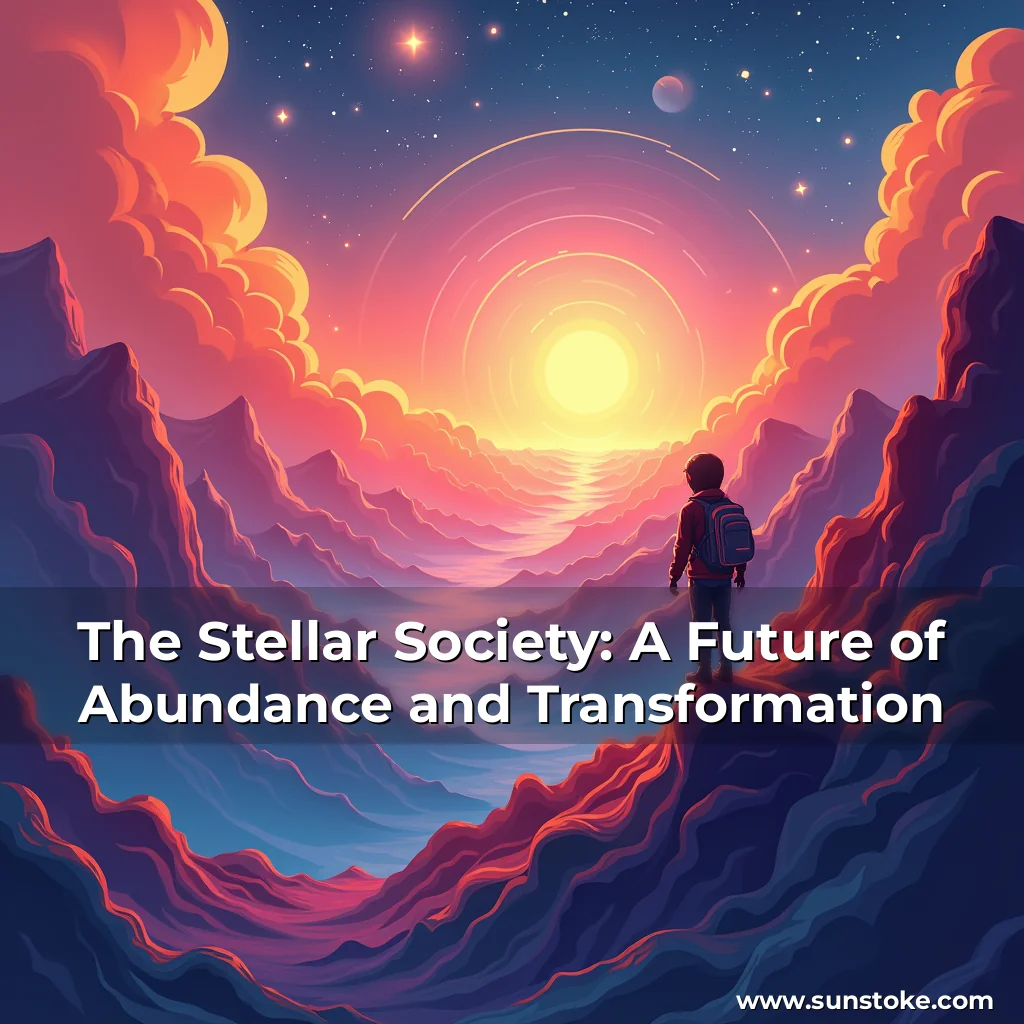
Stellar Society
Key Predictions of the Stellar Society
- Energy Abundance: Solar, wind, and battery technologies will provide cheap, nearly free energy by 2030, enabling a “stellar energy system” that eliminates reliance on fossil fuels.
- Transportation and Food Disruptions: Autonomous electric vehicles and lab-grown meat could reshape industries, reducing costs and environmental impact.
- Economic and Social Transformation: The Stellar World would dissolve scarcity-driven conflicts, enabling human flourishing and environmental restoration.
Challenges and Barriers to the Stellar Society
- Technological Scaling: Solar and battery costs have plummeted, but global deployment must accelerate.
- Regulatory and Political Resistance: Transitioning from extractive systems to stellar technologies faces pushback from entrenched interests.
- Social Adaptation: Cultural and economic shifts require collective action and policy innovation.
The Feasibility of the Stellar Society
“The Stellar World won’t just happen, it requires active effort from communities and leaders.”
The distance to the Stellar Society depends on overcoming several barriers, including technological scaling, regulatory and political resistance, and social adaptation. While energy abundance from solar and batteries is imminent, systemic societal changes face greater uncertainty.
Critical Perspectives on the Stellar Society
- Geopolitical Conflicts and Resource Constraints: The transition to a post-scarcity society could exacerbate inequalities if access to abundant resources is unevenly distributed.
- Overly Optimistic Timelines: The reliance on exponential growth mirrors other futurists like Ray Kurzweil, whose timelines have been criticized as overly optimistic.
Conclusion
The Stellar Society is a transformative state of human civilization, not a physical destination. Its “arrival” hinges on technological, economic, and cultural shifts, with key milestones potentially achievable by 2030–2040. To gauge progress, monitor adoption rates of renewable energy, AI, and autonomous systems, but remain skeptical of overly precise timelines.
For further details, explore Tony Seba’s work at stellarworld.com or rethinkx.com.
Ultimately, the Stellar Society represents a future of abundance and transformation, driven by technological innovations and societal shifts.


news is a contributor at SunStoke.com. We are committed to providing well-researched, accurate, and valuable content to our readers.
You May Also Like


Nuclear Power: A Second Look at Colorado’s Options
The recent push to replace coal-fired power plants in Colorado with nuclear reactors has sparked a heated debate about the...
The US Solar Industry's Competitive Advantage: T1 Energy's Access to Polysilicon
The Importance of Domestic Solar Supply Chain Development in the US The US solar industry is currently experiencing a significant...
Harnessing the Power of Solar Energy in Africa
Chinese Tech Firm Huawei Seeks to Accelerate Green Energy Transition The continent of Africa is known for its vast sun-kissed...
Living with Solar and Battery
Jennifer Huber, a resident of Wodonga, Victoria, has experienced the benefits of solar and battery systems firsthand. In an interview...