How Transparent Solar Panels Work
These windows aren’t like traditional solar panels. They don’t absorb all visible light like their counterparts. Instead, they let through the light your eyes can see and capture only invisible rays, such as ultraviolet (UV) and infrared (IR). It’s as if the window has a “detective mode,” seeing what no one else sees and transforming it into electricity.
- They operate on a different principle: capturing UV and IR radiation, not visible light.
- These windows are made of extremely thin materials like perovskites and special polymers.
- They are designed to balance visibility and energy generation.
Types of Transparent Solar Panels
There are two main types of transparent solar panels:
- Fully transparent: identical in appearance to regular glass (but with lower efficiency).
- Semi-transparent: balancing visibility and energy generation with better practical results.
“We’re not just looking for a new material, we’re looking for a new way of thinking about how we use energy.” – Dr. Maria Rodriguez, researcher at the University of California, Berkeley
Where Can This Technology Be Used?
The answer is in more places than we could imagine:
- Sustainable architecture: think of glass buildings generating energy for their own consumption.
- Electric vehicles: manufacturers are testing this technology on solar roofs on cars, trains, and even boats, which helps charge batteries even when the vehicle is turned off.
- Smart cities: from streetlights, traffic lights, and sidewalks to urban panels that can use transparent panels to operate on clean, independent energy.
- Electronics and wearables: from solar watches to glasses with self-charging sensors.
Aesthetics and Advantages
Besides versatility, one of the greatest advantages is aesthetics: the technology doesn’t interfere with the design of products or buildings. Everything works behind the scenes. This even reminds us of those other solar panels that, unlike this transparent one, are colored, you choose: green, red, orange, or silver, all with unexpected performance. Highlights
• Cost is still a barrier, especially for 100% transparent models. • The average efficiency is still lower than that of traditional solar panels. • The durability of materials like perovskite is still being optimized.
Challenges and Limitations
Of course, it’s not all positives… Because it’s a new technology, cost is still a barrier, especially for 100% transparent models. While a semi-transparent window can cost around $80/m², completely invisible versions exceed $400/m². Other than that:
- The average efficiency is still lower than that of traditional solar panels, ranging from 7-10%.
- The durability of materials like perovskite is still being optimized; many lose efficiency over time and with exposure to moisture.
- Energy production depends on UV and IR radiation, which can be compromised in locations with frequent cloudy days or constantly shaded windows.
Conclusion
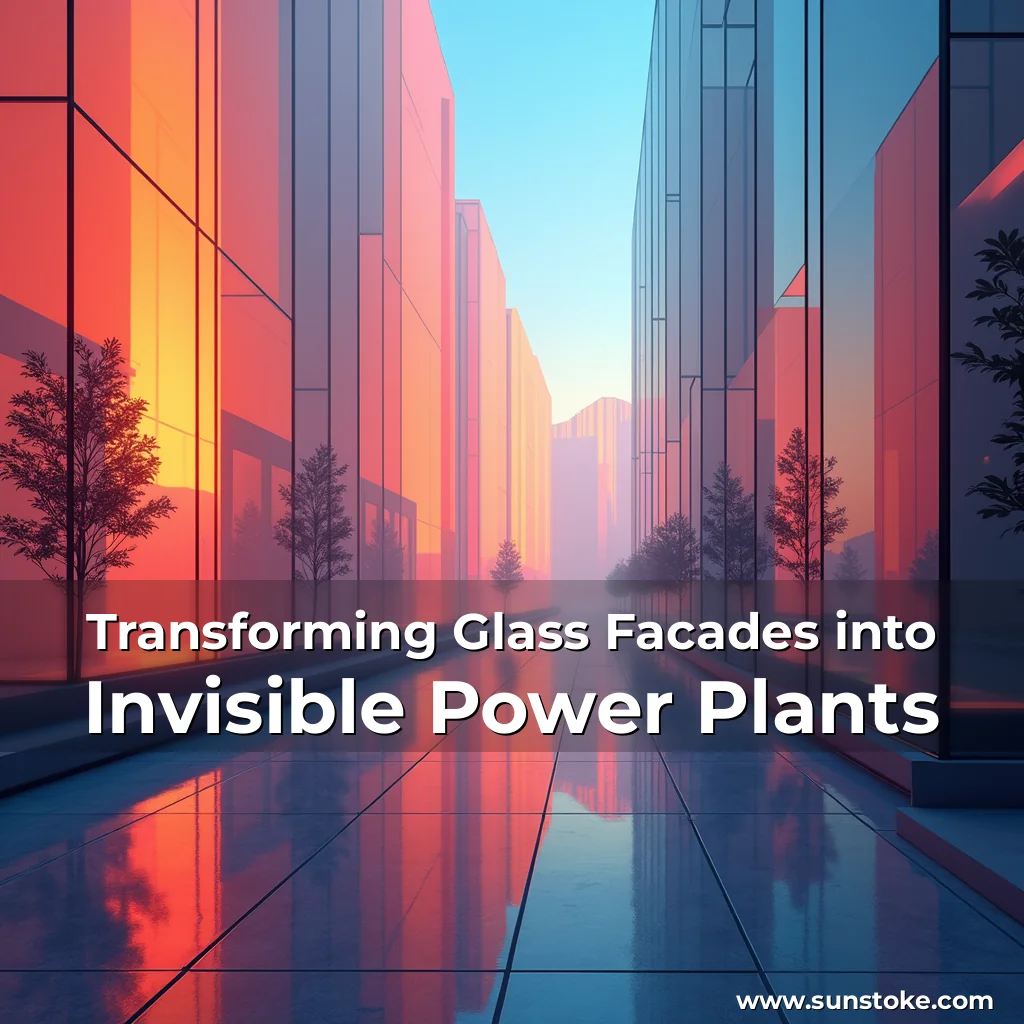
Transparent solar panels are transforming glass facades into invisible power plants. While they have their advantages, they also come with challenges and limitations. As the technology advances, we can expect to see more efficient and affordable versions in the future. For now, they are an exciting development in the field of renewable energy.