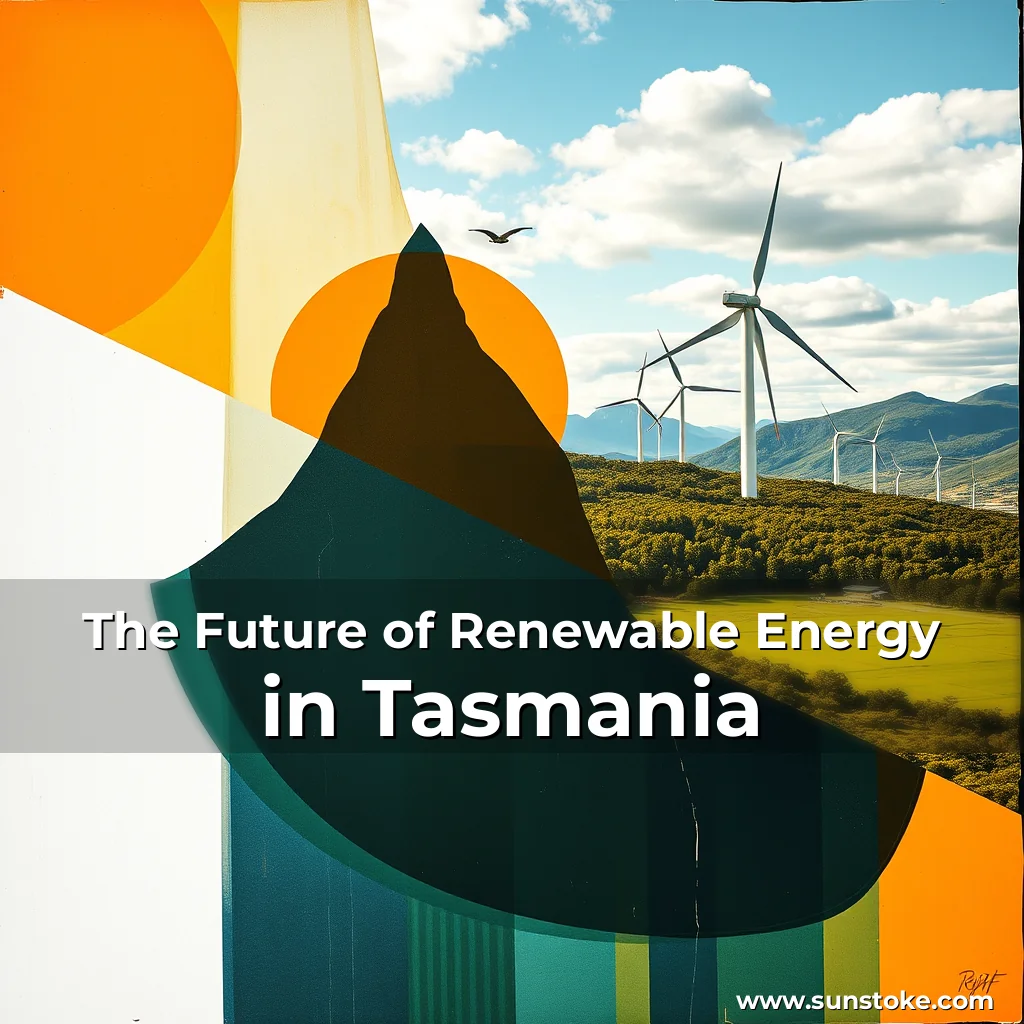
The state of Tasmania is known for its pristine natural beauty, and its residents are looking for ways to reduce their carbon footprint while preserving the environment. The Downie family from Dungrove and the Bowden family from Weasel Plains have come together to propose a groundbreaking solar-plus-storage project in collaboration with Alternate Path, an energy consultancy based in Victoria.
Project Overview
The proposed project will feature a solar PV element with a generation capacity of up to 250MW, making it one of the largest solar farms in the country. The co-located battery energy storage system (BESS) will be 144MW/576MWh in size and occupy a 3-hectare area, showcasing the potential for large-scale renewable energy production in Tasmania.
- Key features of the project include:
- Up to 4,000 single-axis tracking PV modules installed over 270 hectares of land.
- Agrivoltaics, which allows for the continuation of agricultural practices, such as sheep grazing, alongside solar power production.
- A 33kV to 22kV substation and a 220kV switchyard within the BESS site, connecting the solar-plus-storage site to the wider NEM.
Benefits for the Local Community
The project developers have stated their desire to ensure forestry practices can continue in the vicinity to generate significant social and economic benefits for the local community, surrounding landowners, and the state of Tasmania. This aligns with the government’s goal of promoting sustainable land use practices.
Agrivoltaics: A Game-Changer for Rural Areas
Agrivoltaics, a practice that combines agricultural activities with solar power production, has the potential to revolutionize rural areas like Tasmania. By allowing for the continuation of farming practices, agrivoltaics can help to maintain biodiversity, promote sustainable land use, and generate additional income streams for local farmers.
Decommissioning and Maintenance
The project’s anticipated operational lifespan is 30 to 40 years. At the end of its tenure, the plant will be decommissioned, ensuring that the site will not remain a permanent eyesore. Regular maintenance will also be carried out to ensure the continued safe and efficient operation of the solar-plus-storage facility.
Comparative Example: The Blue Grass Solar Farm
The proposed solar-plus-storage project in Tasmania shares similarities with the already operational Blue Grass Solar Farm in Queensland. The Blue Grass plant, owned by Spanish solar PV developer X-Elio, features advanced inverters that enable grid-forming functions, allowing it to perform essential grid services, including inertia and voltage support. This technology has the potential to transform the way renewable energy is generated and distributed in Australia.
Conclusion
The proposed solar-plus-storage project in Tasmania has the potential to become a model for sustainable land use practices and renewable energy production. With the support of Alternate Path, the Downie and Bowden families are committed to ensuring that the project benefits the local community and promotes environmental sustainability. As the state of Tasmania continues to evolve, it is essential to prioritize renewable energy sources and innovative technologies that can help reduce our carbon footprint and preserve the environment for future generations.