
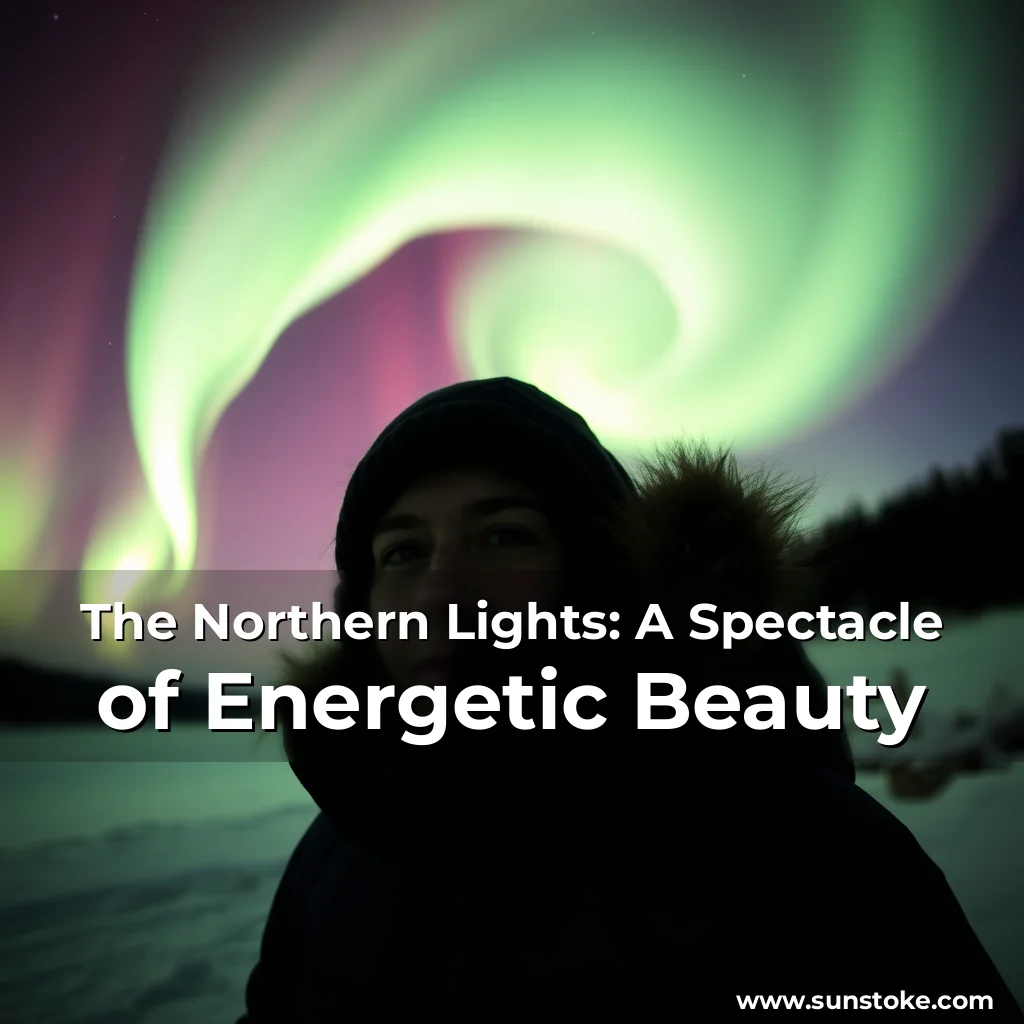
The breathtaking display of the Northern Lights, also known as the aurora borealis, has recently been spotted in the northern parts of the UK, a phenomenon that is not typically seen in these regions. This occurrence is attributed to the current state of the Sun, which is undergoing its solar maximum, a period of heightened solar activity that occurs every 11 years.
The Science Behind the Northern Lights
The Northern Lights are caused by the interaction between the energy and charged particles released from the Sun through coronal mass ejections (CMEs) and solar flares, and the Earth’s magnetic field and upper atmosphere. These particles travel towards the Earth on the solar wind and collide with the atmosphere, creating spectacular displays of colorful lights.
- These particles are accelerated to high speeds by the solar flares, making them more energetic and capable of interacting with the Earth’s magnetic field.
- The Earth’s magnetic field acts as a shield, deflecting the particles towards the upper atmosphere, where they collide with gases.
- The resulting collision creates a spectacular display of colors, including blue, purple, green, pink, and red, due to the different wavelengths of light emitted by the excited atoms and molecules.
Geomagnetic Activity and the Northern Lights
Geomagnetic activity plays a crucial role in determining the visibility of the Northern Lights. The University of Lancaster’s AuroraWatch UK website provides real-time monitoring of geomagnetic activity, allowing us to track the solar activity and its effects on the Earth’s magnetic field. When the geomagnetic activity is high, it increases the likelihood of the Northern Lights being visible.
| Geomagnetic Activity | Red Alert Levels |
|---|---|
| AuroraWatch UK’s Red Alert | More than double the levels seen on Tuesday night |
| Visibility | Likely to be visible by eye and camera from anywhere in the UK |
How to Capture the Northern Lights
While the Northern Lights are visible to the naked eye, the colors often appear faint and muted compared to those captured by camera. To take better pictures of the aerial phenomena, photographers use manual camera settings and a wide aperture on a camera. They also use low shutter speeds, up to 20 seconds, and set the camera’s ISO value all the way to 2,000 or higher.
“The Northern Lights are a photographer’s dream, but they require the right equipment and technique to capture their full beauty.”
— Adobe
Recent Sightings and Future Predictions
The Northern Lights have been spotted in the northern parts of the UK recently, and there is a possibility that they could return again tonight. According to AuroraWatch UK, the geomagnetic activity has spiked again, raising the prospect of a repeat. However, the chances of seeing the aurora on Wednesday night are limited due to the passing of the CME that reached Earth on Tuesday and the associated cloud cover.
- The CME has now passed, and the northern areas, where it tends to be most visible, will see overcast cloud cover with some rain.
- The south will have clearer skies, but it’s less likely to reach as far.
- The associated effects from the CME on Tuesday will still be visible, but it’s unclear how strong they will be.
What’s the Best Way to Capture the Northern Lights?
While the Northern Lights are visible to the naked eye, the colors often appear faint and muted compared to those captured by camera. This requires a good understanding of camera settings and a willingness to experiment with different techniques.
Conclusion
The Northern Lights are a breathtaking display of energetic beauty, caused by the interaction between the energy and charged particles released from the Sun and the Earth’s magnetic field and upper atmosphere. The current state of the Sun, undergoing its solar maximum, has led to an increase in geomagnetic activity, making it more likely for the Northern Lights to be visible in the northern parts of the UK. While the chances of seeing the aurora on Wednesday night are limited, photographers can still capture the beauty of the Northern Lights using the right equipment and technique.